
Powder coating is more than just a surface treatment—this is how we ensure delivery reliability and top quality even in the most demanding projects
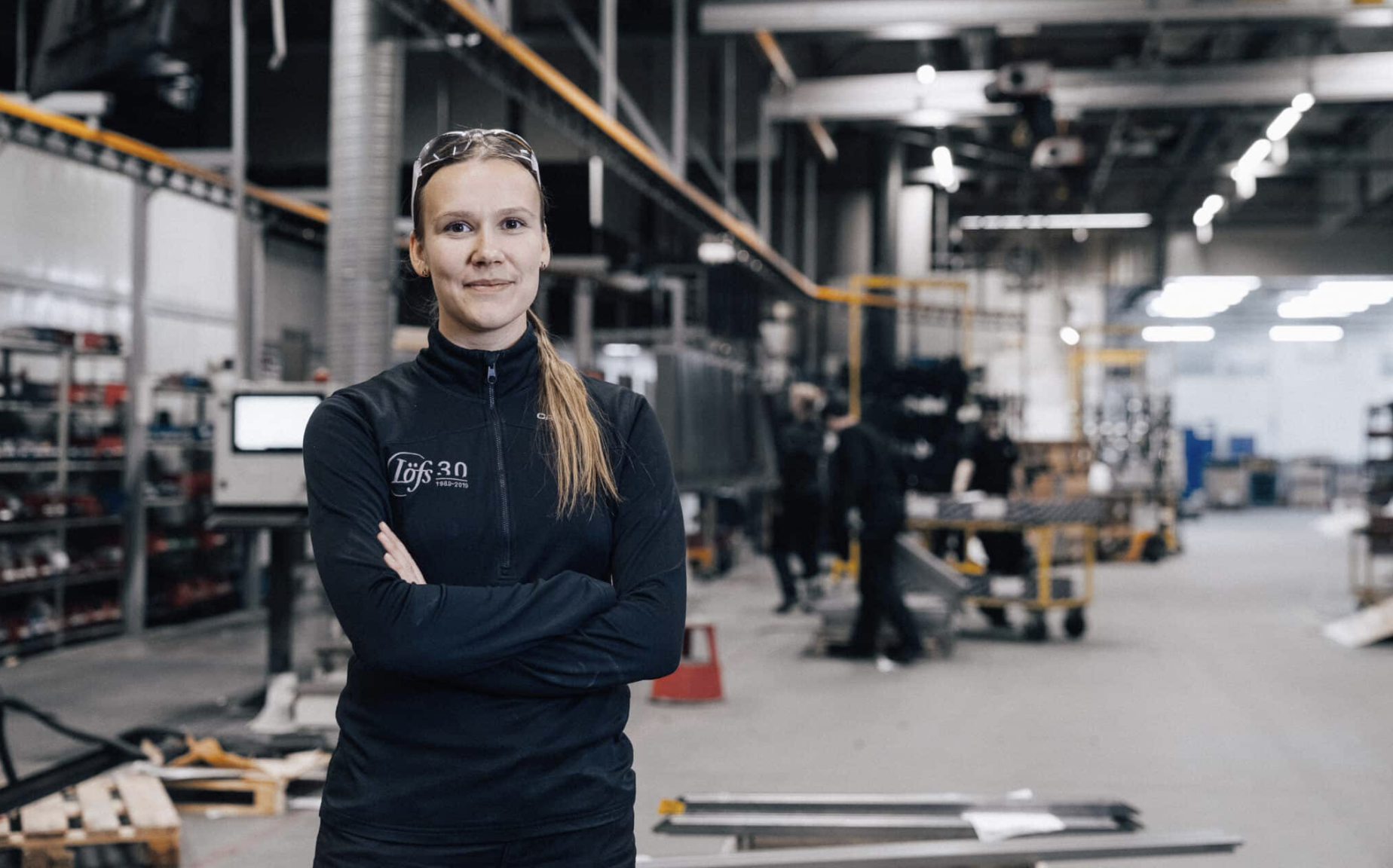
For many manufacturing companies powder coating is an excellent option thanks to its durability, versatility, and environmental friendliness. Löfs promises its customers reliable delivery, a durable and attractive finish, and consultative, customer-focused service. But how can these promises be fulfilled in practice when it comes to powder coating? Löfs’ Quality Coordinator, Sofia Matikainen, has agreed to take us deeper into the subject.
Check out 4 reasons to choose Löfs powder coating (in Finnish)
Our internal supply chain ensures that orders reach customers on time
Löfs’ powder coating lines not only meet today’s high industrial quality standards, but are also designed to optimize workflows to ensure a more efficient and flexible delivery process. Thanks to both manual and automated lines, powder coating can be performed flexibly on parts ranging from small to exceptionally large. As a result, Löfs’ on-time delivery rate typically remains above 95%.
“We have some of the most modern powder coating lines in the Nordic countries, combining automation and craftsmanship. For example, we’ve implemented automated measurement protocols that allow us to enter critical readings directly into the system, which reduces manual errors and speeds up the process,” says Sofia Matikainen.
For certain parts, the painting process itself can also be fully automated, allowing a robot to handle, for example, corners or other areas that the spray guns in the paint booth cannot reach—areas that previously required human intervention. The production lines also use work orders, which allow the various work stages to be scanned directly into the enterprise resource planning system.
“Work cards help keep every project under control and ensure a smooth flow of information with customers. So there’s no longer any need to go to the production side to check what stage the order is at,” explains Sofia Matikainen.
A durable and beautiful surface requires constant monitoring and development
One of Löfs’ strengths is continuous improvement, which is supported by, among other things, the effective use of data and regular production meetings.
“We closely monitor the operations of every line and department, and we also review matters with the production team on a weekly basis, because this is the only way we can respond to potential challenges in a timely manner and make the necessary improvements,” explains Sofia Matikainen.
Löfs’ quality management system meets the requirements of the ISO 9001:2015 standard, which in practice is much more than just a certificate to hang on the wall. Rather, it serves as a guiding principle for quality control throughout the entire production process. At Löfs, quality is monitored at multiple levels, and any deviations are analyzed in detail so they can be corrected.
“We have developed a specialized set of metrics so that we can also examine factors related to efficiency and safety in greater detail,” says Sofia Matikainen.
Löfs has also adopted the Japanese 5S method, which is known for improving order and efficiency in production facilities.
“5S is a tool we use to ensure that all workstations are clean and organized, which in turn increases work efficiency. This systematic approach helps us keep production running smoothly and error-free, even under demanding conditions,” says Sofia Matikainen.
Data-driven management plays a key role in the continuous optimization of paint line operations. For customers, this translates into a surface finish that not only meets current durability requirements but also looks great.
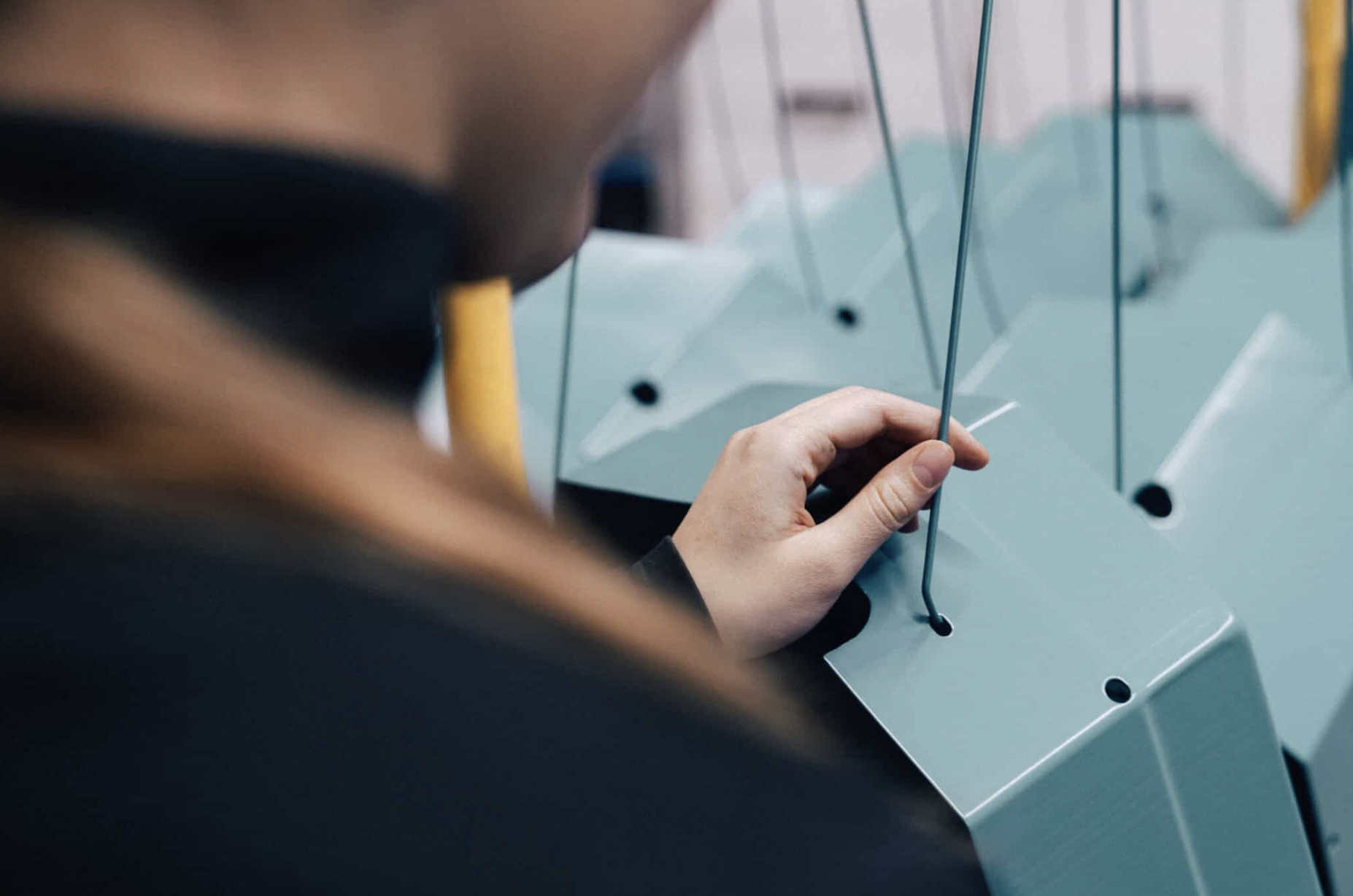
Expertise and collaboration ensure success even in the most demanding surface treatment projects
Löfs doesn’t just offer surface treatment; it actively partners with its customers to help them select the right painting systems and standards. This consultative approach is a key factor in demanding projects where, for example, test coatings and audits are part of quality assurance.
“We often discuss matters with our customers as early as the project planning phase to ensure that every possible factor is taken into account, considering the product’s intended use and the properties required of the surface treatment. Sometimes we also suggest improvements to the customer’s preferred choices or consult with paint manufacturers regarding technical details,” Matikainen explains.
By choosing powder coating from Löfs, manufacturing companies get much more than just a surface treatment—they gain a knowledgeable partner and a comprehensive service based on certified quality, systematic work processes, and extensive experience.
Toward a More Eco-Friendly and Automated Powder Coating Process, Driven by Artificial Intelligence?
Löfs’ powder coating process is designed not only with efficiency and quality in mind, but also with environmental sustainability.
Powder coating does not use solvents or VOCs, which significantly reduces emissions. The company also uses an EHS metrics system to monitor the environmental impact and safety of its production.
“Waste from powder coating is minimal, as excess paint is collected and recycled for reuse. In addition, energy consumption has been optimized, and a heat recovery system helps reduce the process’s environmental impact,” says Quality Coordinator Sofia Matikainen.
In the future, automation and environmental sustainability may play an even greater role in powder coating. For example, tracking the carbon footprint across the entire company’s operations—and even measuring CO2 emissions on a product-by-product basis—could enable more precise environmental optimization in every project.
“The use of artificial intelligence may increase in the future, which would enable the automation of even more precise instructions for various products. This, in turn, would certainly increase the cost-effectiveness of the process and further help maintain a high level of delivery reliability,” Sofia Matikainen estimates.