Electrogalvanizing
Electrogalvanizing for High Demanding Industrial Requirements
Precision Electrogalvanizing Secures Stringent Component Dimensional Tolerances
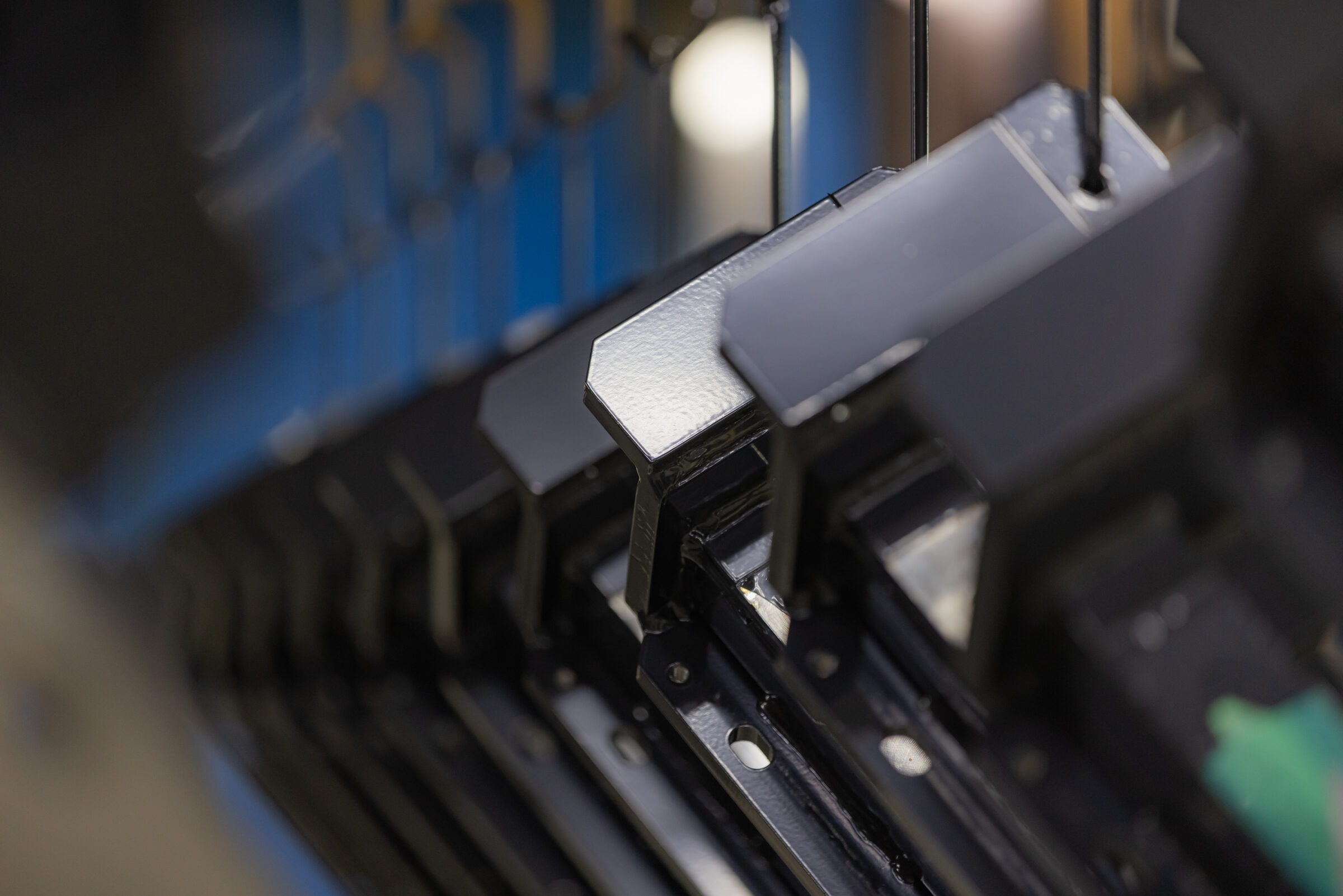
Löfs’ automated electrogalvanizing lines execute high-specification surface conditioning engineered engineered for components requiring absolute micron-level accuracy. The electrolytic matrix guarantees uniform film thickness (typically 5–15 µm, calibrated up to 30 µm), establishing an absolute prerequisite for complex machinery parts, precision threads, and high-strength fasteners.
The manufacturing infrastructure maintains continuous process stability across high-volume production series and specialized custom geometries alike. Certified quality protocols eliminate material variances, securing maximum corrosion resistance without altering primary dimensional parameters.
electrogalvanizing
Execution without Exceptions
- Optimized for large production runs and complex parts
- Excellent protection for sheet metal, hydraulic, and welding components
- Finished with high-quality blue and yellow passivation treatments
methods
Uncompromising Corrosion Protection Secures Complete Component Functional Tolerances
Electrogalvanizing guarantees high-specification surface uniformities for industrial components requiring absolute dimensional accuracy and unimpeded mechanical functionality. The chemical composition prevents dimensional distortion, ensuring seamless operations for high-precision threads, moving fittings, and critical toleranced assemblies.
The automated process sequence integrates automated pre-cleaning, electrolytic zinc deposition, and advanced post-treatment passivation matrices. Löfs’ engineering expertise calibrates the precise coating thickness and custom passivation configurations based strictly on the component’s destructive atmospheric exposure and operational parameters.
-
Blue Passivation
Advanced chemical post-treatment deploying carefully selected salts that deposit a uniform, slightly bluish or bright gray passive layer. Engineered specifically to secure robust atmospheric protection for high-precision fasteners, small industrial components, and machined fasteners.
-
Yellow Passivation
High-performance chromate post-treatment reacting directly with the metallic substrate to create a dense protective matrix with a distinct golden iridescence. Delivers exceptional long-term corrosion barriers for highly critical machinery components, heavy electrical engineering, and severe industrial environments.
CUSTOMER STORY
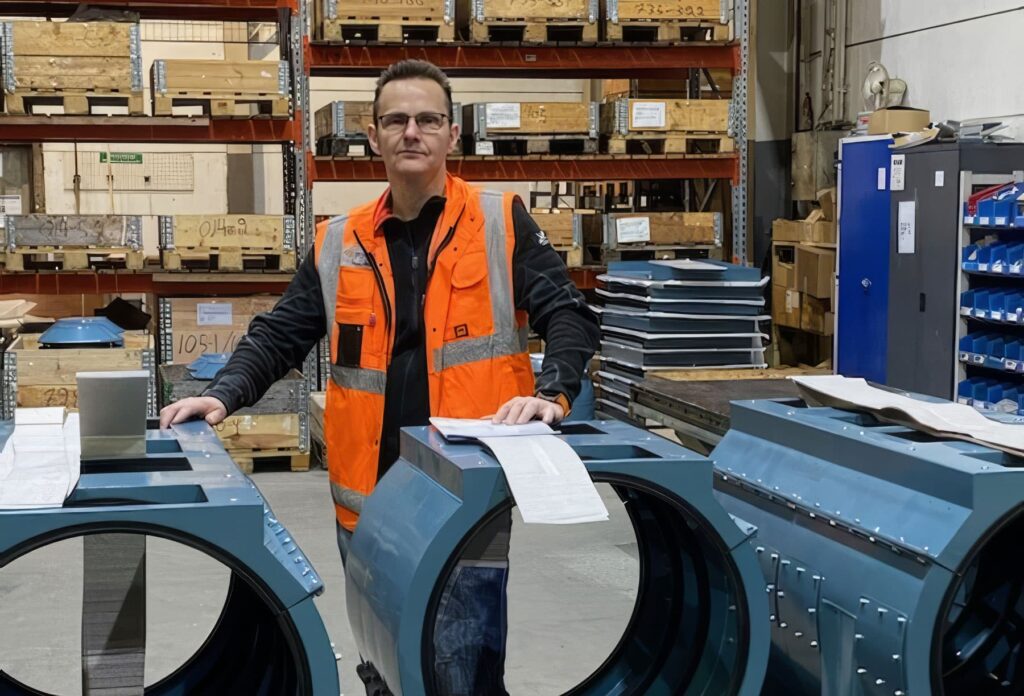
Steelcomp relies on Löfs’ expertise
The biggest benefit for us has been improved quality and consistent delivery.
Timo Viitanen
Director of Production and Development
Steelcomp
a partnership that goes beyond the surface
Solutions that Support Production
01
Surface Treatment Consulting
We help manufacturing companies identify the best solutions, develop their own surface treatment processes, or plan a new paint shop, including investment calculations.
With over 30 years of practical experience, we optimize material selection, equipment, and production processes (such as OEE monitoring and ERP integrations). Our expert consulting services ensure that you avoid unnecessary costs, quality issues, and production inefficiencies.
02
System Delivieries
We deliver fully integrated and optimized solutions for the handling and assembly of materials and products.
In addition to surface treatment, we source necessary components on your behalf, execute precision assembly, handle final packaging, and manage storage. A comprehensive turnkey solution reduces total cost of ownership and guarantees predictability in the supply chain.
03
Outsourcing Surface Treatment
We evaluate whether an in-house coating setup supports your long-term strategy, or if outsourcing delivers superior operational and financial outcomes.
Whether you need a hybrid model to absorb peak volume or a complete transition to our advanced production facilities, we scale to match your demands.
Partnering with Löfs frees internal resources, eliminates heavy capital investments, and secures uncompromised, certified quality under all market conditions.
Certified Quality Architecture of the Electrogalvanizing Process

Multi-stage pre-cleaning
Before the parts are transferred to the electrolysis tank, they undergo several thorough chemical cleaning and degreasing steps. This ensures that the steel surface is microscopically clean of all machining residues.
Electrochemical Coating
The cleaned workpiece is immersed in an electrolytic bath. An electric current causes zinc ions to migrate and deposit evenly onto the steel surface, forming a dense, thin, and shiny metallic zinc coating.
Passivization Process
After galvanizing, the surface is immediately sealed and protected using either blue or yellow passivation. This chemical post-treatment stops the natural oxidation of zinc and significantly increases the corrosion resistance of the finished surface.
Quality Assurance and Measurement
Since electroplating involves micrometers, we check the coating thickness using a high-precision X-ray measuring device or digital gauges. Our ISO 9001-certified quality assurance ensures that batches are completely identical.
Contact Us
Our surface treatment experts are here to help you with any questions you may have. Please contact us if you need more information about our galvanizing services or are looking for a long-term partner to streamline your industrial production.

Request a Proposal
Frequently Asked Questions About Electrogalvanizing
We serve metal, machinery, and equipment manufacturers offering industrial-scale capacity and uncompromising quality. Below, you’ll find answers to the most common questions related to electrogalvanizing.
Electroplating is an engineering umbrella term for electrochemical coating methods where a substrate is coated with another metallic layer via electrolysis. This technical category encompasses processes such as chrome and nickel plating. Electrogalvanizing is a specific, high-precision branch of electroplating designed explicitly for deposition of zinc.
While the general manufacturing sector occasionally uses the terms interchangeably, Löfs deploys high-specification electrogalvanizing to guarantee absolute component dimensional stability and repeatable micron-level tolerance management.
The selection between coating methodologies is determined strictly by component geometry, dimensional tolerances, and the target operational environment. In hot-dip galvanizing, the component is immersed in molten zinc, producing a heavy and uneven protective barrier engineered for massive steel assemblies and heavy-duty outdoor structures. However, the extreme thermal stress of the process can warp thin sheet metal components, and the zinc thickness can clog high-precision threads and alter critical dimensions.
Electrogalvanizing executes the zinc deposition within an electrolytic process at ambient temperature, guaranteeing absolute structural stability without the risk of thermal distortion. The resulting zinc layer is mathematically uniform and microscopically thin (5–15 µm) ensuring that precision machined dimensions, complex threads, and strict tolerances remain completely unchanged. Electrogalvanizing is engineered specifically for precision mechanics, complex sheet metal parts, and tight-tolerance components, while hot-dip galvanizing is reserved for massive structural steel.
Löfs does not recommend electrogalvanizing as a primary pretreatment when the objective is maximized, long-term atmospheric corrosion protection. While technically feasible, combining electrogalvanizing with topcoat systems does not produce an optimal or structurally predictable bonding surface for heavy industrial configurations.
For painting applications, Löfs deploys specialized mechanical and chemical pretreatments, such as automated steel grit blasting and industrial washing systems. Integrated directly with our certified powder or liquid coating processes, these methods establish a fundamentally superior, reproducible bonding profile and verified corrosion resistance engineered for high-volume manufacturing standards.